


Art of the rise: The Most Effective Way to Fish with Dry Flies

There's a special magic in watching a trout rise to sip a dry fly from the surface. It's the essence of fly fishing — visual, technical, and deeply rewarding. But dry fly fishing isn't just about casting a bug on the water and hoping for the best. To be truly effective, you need strategy, observation, and precision. Here's how to master the art of fishing with dry flies.

1. Understand the Hatch
The foundation of successful dry fly fishing is matching the hatch. Insects hatch in specific stages, and fish often key in on one phase. Spend time observing the water:
What insects are in the air or on the surface?
Are trout rising consistently or sporadically?
Is there a spinner fall or an emergence?
Use a small seine net or even your hand to catch a sample of bugs. Match the size, color, and shape as closely as possible with the assortment in your fly box.
2. Approach with Stealth
Dry fly fishing demands a quiet, careful approach. Trout feeding on the surface are alert and easily spooked.
Stay low and move slowly, especially in clear or shallow water.
Use the sun and wind to your advantage—position yourself so you’re not casting a shadow across the fish.
Avoid wading if possible—cast from the bank or kneel in the shallows.
3. Perfect Your Presentation
The most lifelike fly in the world won't fool a trout if it drags unnaturally on the surface.
Use a long, fine leader (9-12 feet) to create natural drift and reduce drag.
Mend your line upstream immediately after your cast to prevent it from pulling the fly.
Try a reach cast or parachute cast to improve your initial drift.
Keep your rod tip high and track your fly visually. If you see a rise near your fly, wait for the trout’s mouth to close before setting the hook.

4. Rod Action Matters
A good dry fly rod should excel at presenting your fly in a delicate fashion which is key to avoid spooking fish feeding on the surface. A medium fast action rod is a good place to start as they allow for softer more controlled casts. Our Fryingpan model excels at throwing dry flies with delicate precision which is all important when trying to perfectly present your fly to a rising fish.
5. Target Actively Rising Fish
Blind casting can work in some situations, but the most effective dry fly anglers target specific fish.
Look for consistent risers—these fish are feeding and catchable.
Time your cast to land just before the next rise, anticipating the fish’s rhythm.
Don’t cast too many times—two or three well-placed casts are better than a dozen sloppy ones.
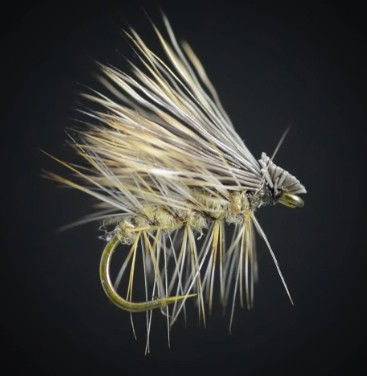
6. Adapt and Adjust
Trout are notoriously picky. If a fish refuses your fly:
Change your pattern—often a smaller size or more subtle color helps.
Try a different stage—if an adult dry isn’t working, try an emerger or cripple pattern.
Grease only the thorax or hackle—so the fly rides partially submerged, mimicking a struggling emerger.
Sometimes even shifting to a downstream presentation can be enough to get the take.
7. Use the Right Tippet and Floatant
Fine tippet (5X–7X) allows for a more delicate presentation. Treat your fly with floatant (gel, powder, or shake) before each cast, and use desiccant powder to revive it after a fish or splashdown.
8. Observe, Learn, Repeat
The most effective dry fly anglers are patient observers. They read the water, learn from every missed strike, and adjust accordingly. Keep a journal, note conditions, successful flies, and fish behavior. Over time, your instincts will sharpen.
In Conclusion
Dry fly fishing is as much about the experience as the catch. It forces you to slow down, to observe, and to connect more deeply with the water and its rhythms. The rise of a trout to your carefully placed fly is more than a moment — it’s a conversation between angler and fish, and when done right, it ends in a perfect, silent handshake.
So tie on that dry fly, approach with care, and wait for the rise.
Tight lines.


Comments